The Current View
A lengthy downtrend in sector prices had given way to a relatively stable trajectory after mid 2013 similar to that experienced in the latter part of the 1990s and first few years of the 2000s.
The late 1990s and early 2000s was a period of macroeconomic upheaval during which time sector pricing nonetheless proved relatively stable.
Relative stability suggests a chance for companies genuinely adding value through development success to see their share prices move higher. This was the experience in the late 1990s and early 2000s.
Still vulnerable cyclical conditions were aggravated in the second half of 2015 by a push from investors worldwide to reduce risk. Sector prices were pushed to a new cyclical low. These conditions were reversed through 2016 and 2017 although sector prices have done little more than revert to the 2013 levels which had once been regarded as cyclically weak.
With a median decline in prices of ASX-listed resources companies through the cycle of 89%(and 30% of companies suffering a decline of more then 95%), the majority of stocks remain prone to strong 'bottom of the cycle' leverage in response to even slight improvements in conditions.
Has Anything Changed?
The strength of the US dollar exchange rate since mid 2014 had added an unusual weight to US dollar prices. Reversal of some of the currency gains has been adding to commodity price strength through 2017.
Signs of cyclical stabilisation in sector equity prices has meant some very strong ‘bottom of the cycle’ gains.
Funding for project development has passed its most difficult phase with the appearance of a stronger risk appetite.
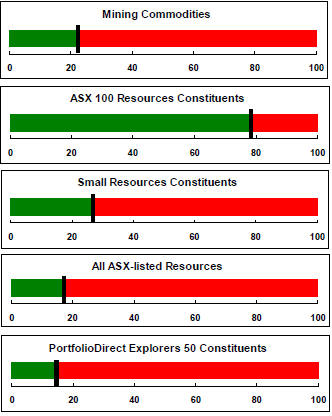
Resource Sector Weekly Returns
Market Breadth Statistics
52 Week Price Ranges
Equity Markets


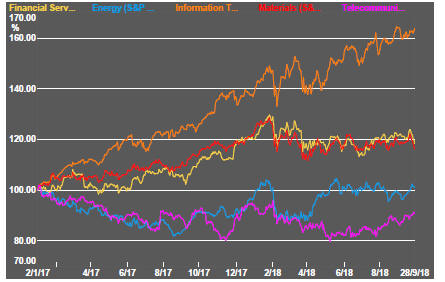

U.S. equity price indicators remained near record levels during the week, albeit edging lower and amidst stronger interest in developing country markets.
Technology stocks have remained an important driver of the U.S. equity market indices.
The broadly based Russell 2000 index has continued to move against the trend of the headline indices despite favourable domestic economic outcomes, including apparently strong household balance sheets and rising confidence fed by falling unemployment and more quickly growing wages.
The impact of U.S. trade policies has yet to be felt within the domestic economy but remains a possible negative influence on U.S. economic growth which might be a source of negative sentiment affecting the Russell 2000 outcomes.
Speaking after announcing that it will raise the Fed Funds rate, Federal Reserve Chairman Jerome Powell referred to feedback from regional federal reserve banks that businesses had begun worrying about the impact of the U.S. trade policies on their financial outcomes.
The U.S. government announced that it had reached an agreement with Canada to complement its trade deal with Mexico to supplant the NAFTA agreement with a new tripartite pact. The U.S. has also finalised a deal with South Korea and has started talks with Japan on liberalising bilateral trade. The Chinese trade dispute, far and away the most important aspect of the global trade picture, remains unresolved with Chinese officials cancelling a previously scheduled round of talks in Washington.
Overall, equity investors appeared unperturbed by the trade uncertainties and willing to focus on earnings and corporate strategic initiatives as dictators of market direction.
Resource Sector Equities


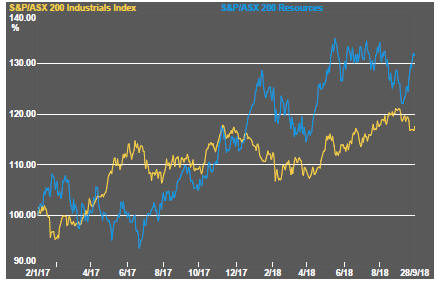
Within the U.S. market context, sentiment towards growth oriented segments has become less supportive with the materials component of the S&P 500 showing a marked loss of momentum.
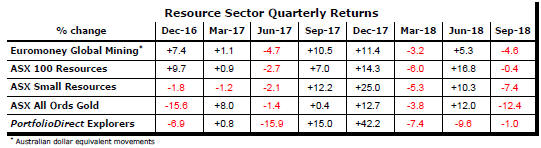
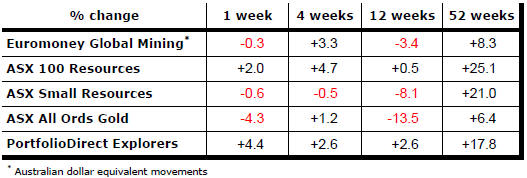
Mining related equities did no better than hold their gains from the prior two weeks. Gold related equity prices were especially weak. The exploration end of the market outperformed the established producers and market leaders.
Interest Rates
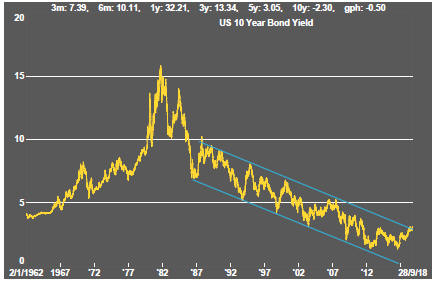
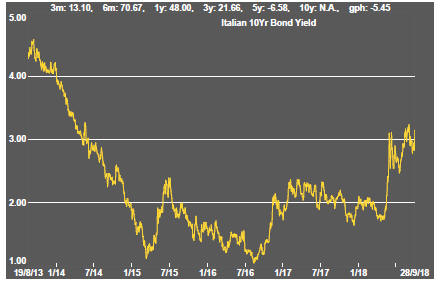
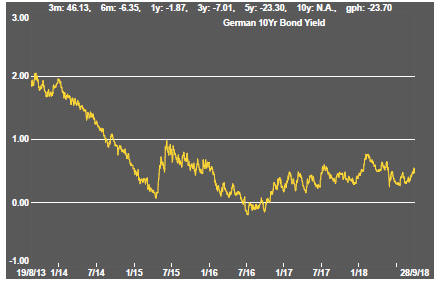
The U.S. Federal Reserve announced a further rise in interest rates, consistent with its policy of gradual rate increases in response to an improving U.S. domestic economy. The Fed continued to characterise growth as strong and inflation having reached its target. It intends to push further toward a non-accommodating stance which would imply another rate rise before the end of 2018 and a succession of further rises in 2019.
The outlook for short term rate rises is keeping upward pressure on U.S. government bond yields. In Europe, the determination of the new Italian government to expand spending has led to a fall in Italian government bond prices. The recently elected government wishes to loosen fiscal constraints to encourage faster economic growth and thereby achieve a better fiscal balance rather than adopt the austerity and tight fiscal policies being sought by the European Union.
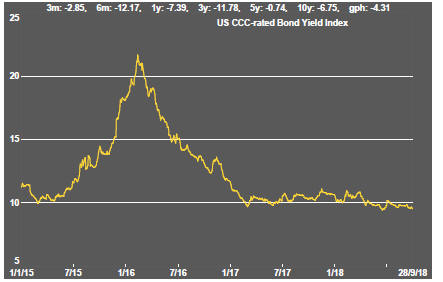
Corporate bond market conditions have not changed significantly despite the upward pressure on official yields.
Exchange Rates

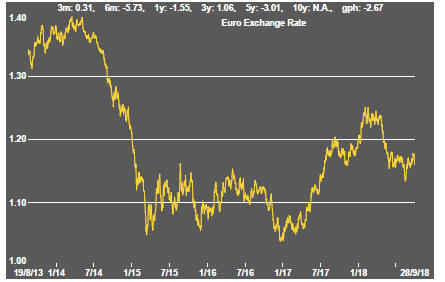


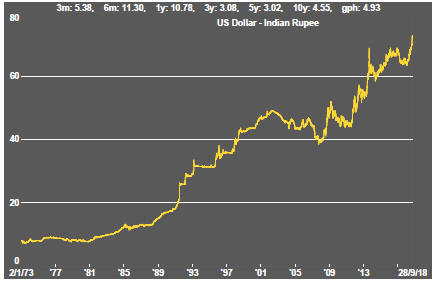
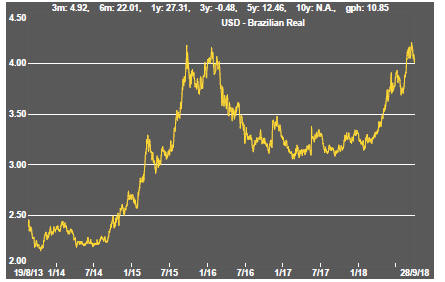
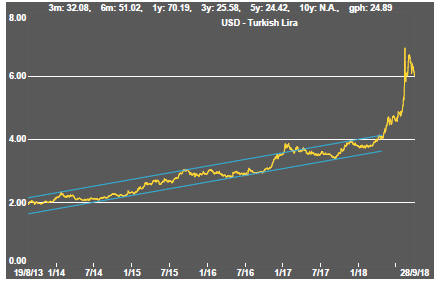

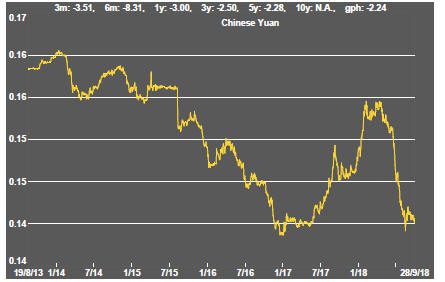

Exchange rate movements remain an important feature of the market landscape although the magnitude of recent changes has diminished.
The US dollar firmed amid expectations of rising relative interest rates. Sterling remains tied to sentiment about terms on which the UK will withdraw from the European Union to be set within the coming four weeks.
The likelihood of further US interest rate rises is putting pressure on developing country currencies. With US rate rises expected to persist over the next 12 months, developing country currency depreciation will be an ongoing risk with a potentially negative impact on global growth outcomes. A stronger US dollar will also negatively impact US dollar denominated commodity prices.
Commodity Prices

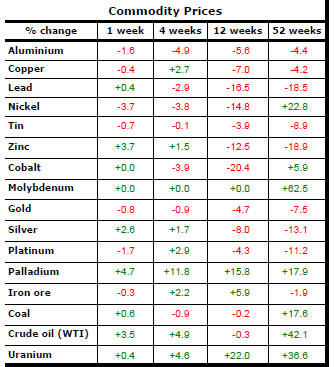
The general upswing in commodity prices since mid 2017 had been given added impetus by stronger crude oil prices.
Diminished momentum has left prices within the bounds of a cyclical trough, albeit at the upper end.
The flip side of the benefits for commodity producers and exporters of higher commodity prices is the cost pressure now being experienced by users of agricultural and raw material commodities. Reporting companies have been suggesting this as a source of margin compression.
Business surveys closely watched by central banks are showing signs of upward pressure on selling prices as a result of higher raw material prices.
Gold & Precious Metals
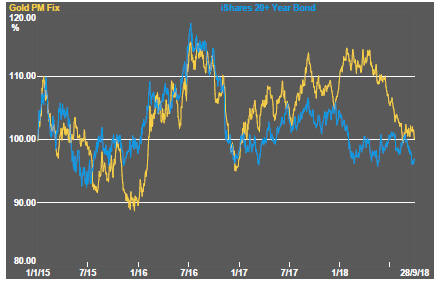


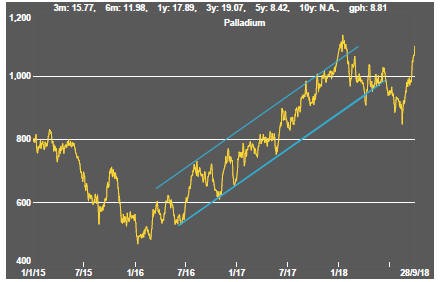
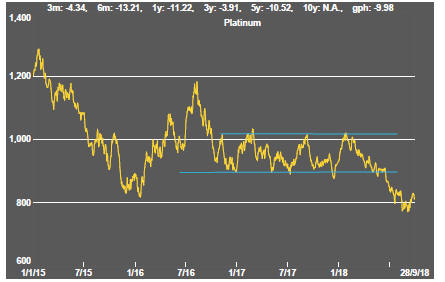


The downward bias to precious metal prices persists with upward US interest rate pressures. That said, gold has, at least for the time being, tended to stabilise. A precipitous drop in silver prices has attracted some modest support. Meanwhile, the palladium price has made a robust recovery.
Australian gold related equity prices are benefiting from a weaker Australian dollar.
Nonferrous Metals


Daily traded nonferrous metal prices finished the week generally moving lower. Modest recoveries over the past two weeks have not been enough to show a convincing break from an evident pattern of cyclical weakness.
Commentaries have linked the trends in metal prices with uncertainties about US trade policies although peak prices were reached in February before trade disputes had intensified and after evidence of a breakdown in global growth synchronisation had emerged.
The tension between bond yields and copper prices remains, suggesting that the impact of metal supply increases is overpowering the growth impact reflected in modest increases in metal usage and higher yields.
Bulk Commodities
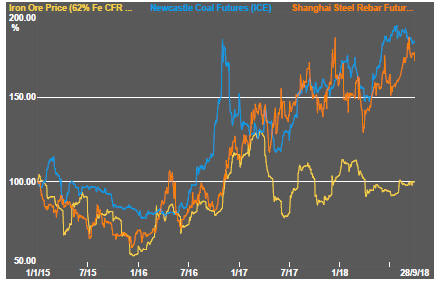
Chinese economic growth reports show the national economy meeting its targets, as one would expect for a centrally planned economy, but suggest it is only doing just enough. There are no signs of upside risk. The tariff fight with the USA is beginning to take a toll on activity rates in an economy with a bias toward less strong growth in the years ahead, in any event.
Higher steel prices have not been reflected in stronger iron ore price outcomes despite the improved profitability of the steelworks. Higher production is possibly in anticipation of more government construction stimulus to keep growth on target. There is also uncertainty about the extent of production curbs over the balance of 2018 as environmental restrictions on production are implemented. .
Coal prices continue at high levels reflecting China’s drive to source cleaner energy and as constraints on new mine development keep a rein on supplies.
Oil and Gas
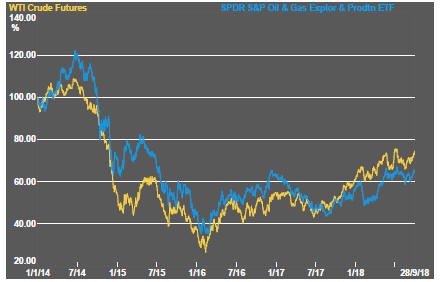

The upward trend in crude oil prices had given way to a leveling out in price although the market has been strengthening in recent weeks prompting President Trump to complain about OPEC management of the market.
OPEC production decisions have helped to support prices as has re-imposition of economic sanctions by the US government on Iran. The failure of effective government in Venezuela has been another contributing influence.
The Iranians have been lobbying European countries to prevent more widespread application of sanctions but the likelihood of relief appears slim as long as funds must circulate through US banks.
US production, in any event, continues to rise and is now matching output from Russia and Saudi Arabia. Texas alone is positioned to be the third largest producer after Russia and Saudi Arabia. Export infrastructure limitations may be the greatest impediment to US production having a greater effect on international energy prices.
Despite the change in tone within crude oil markets, related equity prices have been muted in their responses, implicitly signaling scepticsm about the sustainability of price rises when they have occurred.
Battery Metals
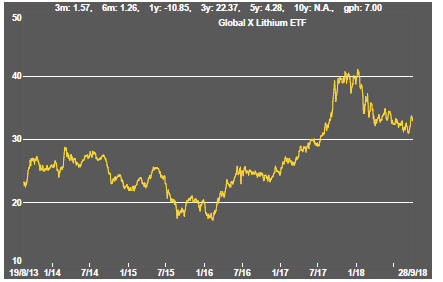
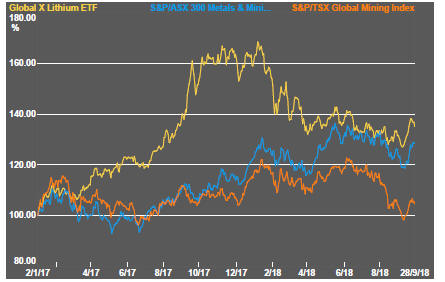
Eighteen months of rising lithium-related stock prices have given way to a prolonged period of market reassessment as a lengthy pipeline of potential new projects has raised the prospect of ongoing supplies better matching expected needs.
Potential lithium producers have been able to respond far more quickly to market signals than has been the case in other segments of the mining industry where development prospects have been slowed by reticence among financiers to back development.
Movements in lithium related equity prices had been aligned more closely with overall sector equity prices in recent weeks with the lithium stocks tending to display a greater leverage to changes in market sentiment about the mining sector.
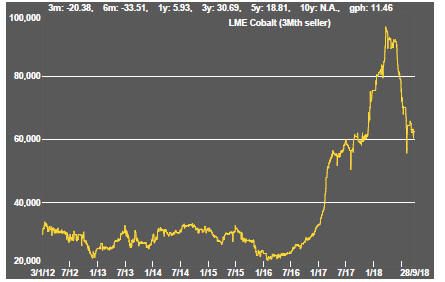
Battery metals remain a focal point for investors with recent attention moving to cobalt and vanadium.
Doubts about political conditions in the Democratic Republic of the Congo (and instances of Ebola) have added a dimension to cobalt prices lacking in other metals caught up in the excitement over the longer term impact of transport electrification.
In the longer term, cobalt is the most vulnerable of the battery related metals to substitution with high prices likely to stimulate research in that direction.
A spokesperson for Panasonic, manufacturer of batteries for Tesla motor vehicles, has been quoted as saying that the company intends to halve the cobalt content of its batteries because of uncertainties over supply although, offsetting such a move, will be the rapid increase in the number of units produced.
Uranium


The uranium sector is in the midst of forming a prolonged cyclical trough as market balances slowly improve. Power utilities are still not prepared to re-enter the market for contracted amounts of metal to meet longer term needs. A slight upward bias in prices has been evident in the past month.
Slightly higher equity prices from time to time, in the hope of improved conditions, have not been sustained but could be repeated as speculation about improved future demand ebbs and flows. The effect of an announcement by Canadian producer Cameco to extend the duration of its previously implemented production cut gave the market a very slight but quickly lost lift.

The Steak or Sizzle? blog LINK contains additional commentary on the best performed stocks in the sector and the extent to which their investment outcomes are underpinned by a strong enough value proposition to sustain the gains.