The Current View
A lengthy downtrend in sector prices had given way to a relatively stable trajectory after mid 2013 similar to that experienced in the latter part of the 1990s and first few years of the 2000s.
The late 1990s and early 2000s was a period of macroeconomic upheaval during which time sector pricing nonetheless proved relatively stable.
Relative stability suggests a chance for companies genuinely adding value through development success to see their share prices move higher. This was the experience in the late 1990s and early 2000s.
Still vulnerable cyclical conditions were aggravated in the second half of 2015 by a push from investors worldwide to reduce risk. Sector prices were pushed to a new cyclical low. These conditions were largely reversed through the first half of 2016 although sector prices have done little more than revert to mid-2015 levels.
With a median decline in prices of ASX-listed resources companies through the cycle of 89%(and 30% of companies suffering a decline of more then 95%), the majority of stocks remain prone to strong 'bottom of the cycle' leverage in response to even slight improvements in conditions.
Has Anything Changed?
A 1990s scenario remains the closest historical parallel although the strength of the US dollar exchange rate since mid 2014 has added an unusual weight to US dollar prices.
The first signs of cyclical stabilisation in sector equity prices have started to show. This has meant some very strong ‘bottom of the cycle’ gains.
Funding for project development may have passed its most difficult phase at the end of 2015 with signs of deals being done and evidence that capital is available for suitably structured transactions.
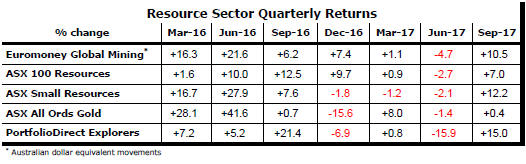
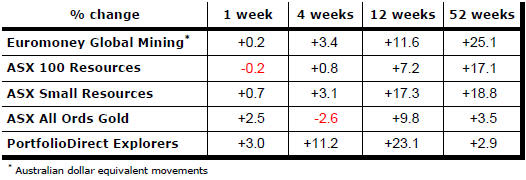
Key Outcomes in the Past Week
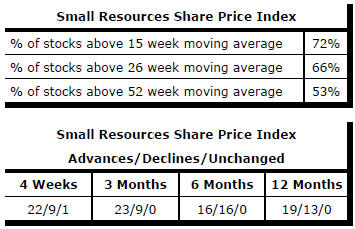
Market Breadth Statistics
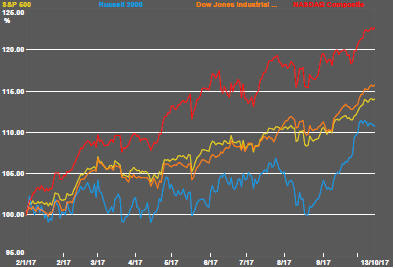
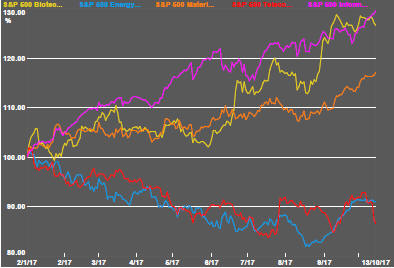
The principal US equity price indicators moved to higher records although the Russell 2000 index, comprising stocks from the smaller end of the market, lost momentum. This may not prove meaningful against the backdrop of the recent strength of this market segment relative to larger cap indices.
Technology - where growth is most evident - has continued to lead but the materials sector which had been lagging has started to turn in stronger performances.
There is a marked spread in performance within the S&P500 with energy and telecommunications sectors lagging and everything else outside technology and biotechnology congregating around the middle of the range of outcomes.
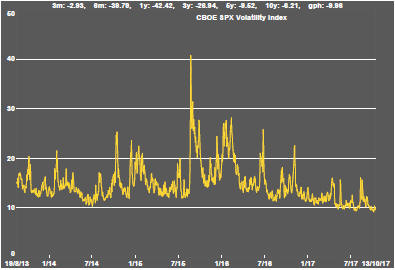
Equity market volatility has remained at the very bottom of its historical range of outcomes.
Previous views that low volatility would signal an imminent turn in market sentiment have appeared to lose force.
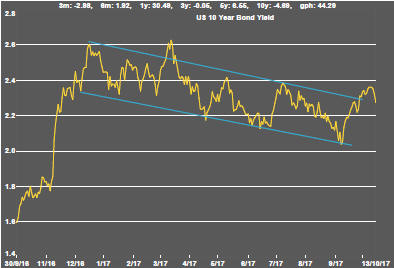
US government bond yields dropped in the latter part of the week after having risen amid expectations of stronger growth and the start of Federal Reserve attempts to downsize its balance sheet.
Despite the duration of the expansion and the upward pressure on short term interest rates, the bond market appears to be downplaying the importance of inflation and the growing burden on financial markets of the ongoing US deficit with the Fed winding back its financing role.
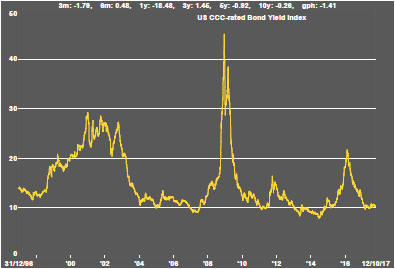
Yields on low rated corporate debt remain low and have shown little tendency to respond to the short term rise in bond yields which had occurred over the prior month.
Relative movements in rates continue to suggest that the market is downplaying risk and failing to prices assets to adequately take account of relative risk attributes.
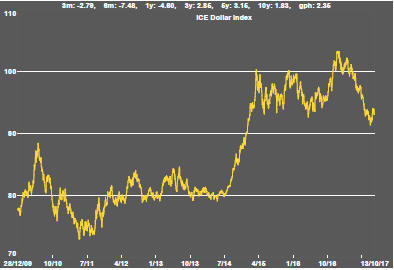
The US dollar is around 10% below its peak values but the decline has stalled as the reappraisal of relative growth conditions which initiated the change in direction has run its course.
As long as US corporate tax reforms are on the table, the US dollar is likely to contain upside risk.
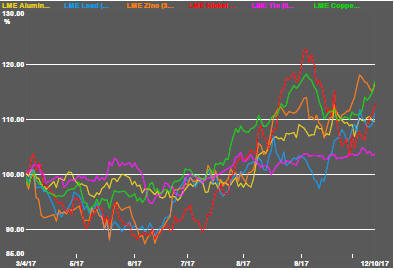
Daily traded nonferrous metal prices were generally firmer during the week with copper and nickel gaining ground. Tin prices have remained the laggard.
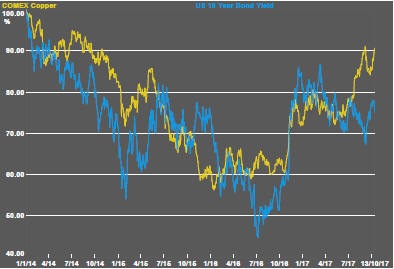
The rinsing copper price was at some odds again with the decline in US government bond yields emphasising the ongoing divergence between equity market preoccupations with growth and debt markets seemingly thinking more pessimistically about the economic outlook.
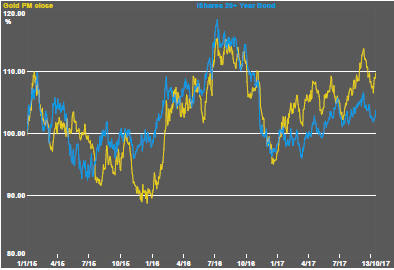
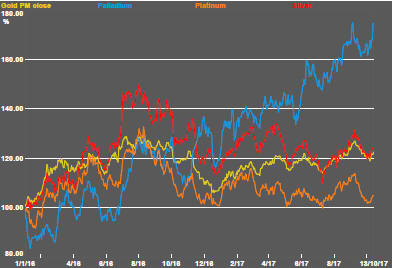
Gold price movements have remained leveraged to financial market conditions. With bond prices pushing up during the week, gold prices were also tracking higher.
Precious metal prices generally moved up with palladium prices continuing to outstrip the others as they have done throughout 2017 in defiance of any link with financial markets.
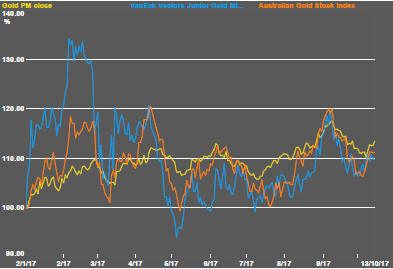
Gold related equities have responded to weaker gold prices over the past year but have reacted less strongly to rises. As a consequence, the return from equities has lagged the bullion return despite gold prices having risen more than 10% since the beginning of 2017.
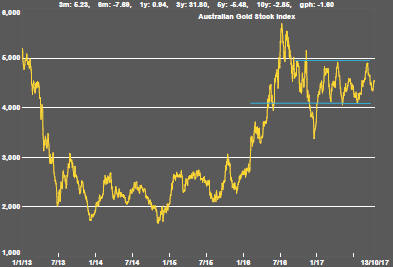
The Australian gold equity price index has remained within the same range for more than a year despite the mix of macro factors suggesting something better should have been possible.
Against a macro background of buoyant equity markets and higher gold bullion prices, pricing of gold related equities is suggesting investor disquiet about asset quality.
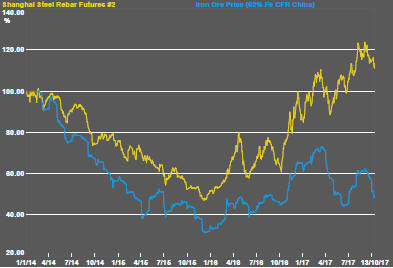
Improvements in Chinese steel market conditions appear to have run their course. The iron ore price was always discounting this possibility but, nonetheless, has weakened in response.
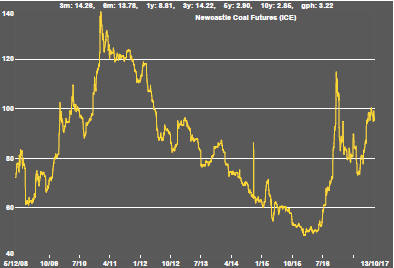
Coal prices have changed little within the context of the bulk commodity segment of the market.
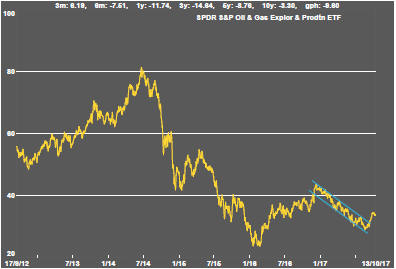
Share prices of companies engaged in oil and gas exploration have broken their downtrend but headwinds from the oil market have placed a cap on more significant upward momentum.
.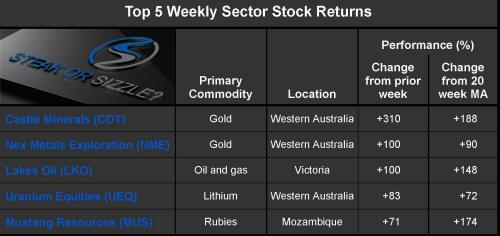
The Steak or Sizzle? blog LINK contains additional commentary on the best performed stocks in the sector and the extent to which their investment outcomes are underpinned by a strong enough value proposition to sustain the gains.
