The Current View
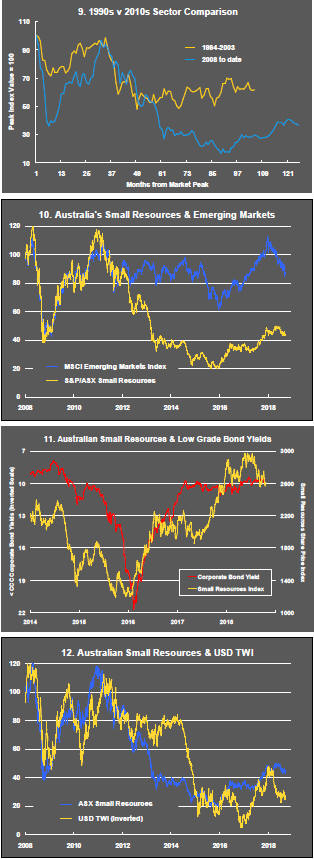
A lengthy downtrend in sector prices had given way to a relatively stable trajectory after mid 2013 similar to that experienced in the latter part of the 1990s and first few years of the 2000s.
The late 1990s and early 2000s was a period of macroeconomic upheaval during which time sector pricing nonetheless proved relatively stable.
Relative stability suggests a chance for companies genuinely adding value through development success to see their share prices move higher. This was the experience in the late 1990s and early 2000s.
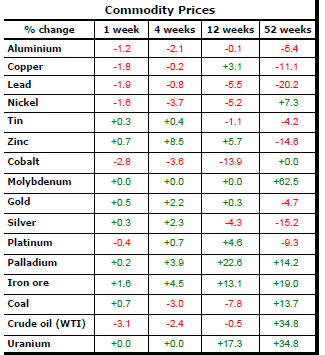
Still vulnerable cyclical conditions were aggravated in the second half of 2015 by a push from investors worldwide to reduce risk. Sector prices were pushed to a new cyclical low. These conditions were reversed through 2016 and 2017 although sector prices have done little more than revert to the 2013 levels which had once been regarded as cyclically weak.
With a median decline in prices of ASX-listed resources companies through the cycle of 89%(and 30% of companies suffering a decline of more then 95%), the majority of stocks remain prone to strong 'bottom of the cycle' leverage in response to even slight improvements in conditions.
Has Anything Changed?
The strength of the US dollar exchange rate since mid 2014 had added an unusual weight to US dollar prices. Reversal of some of the currency gains has been adding to commodity price strength through 2017.
Signs of cyclical stabilisation in sector equity prices has meant some very strong ‘bottom of the cycle’ gains.
Funding for project development has passed its most difficult phase with the appearance of a stronger risk appetite.

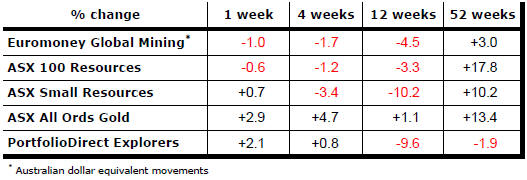
Resource Sector Weekly Returns
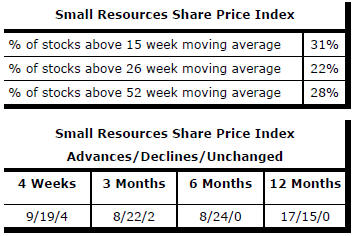
Market Breadth Statistics
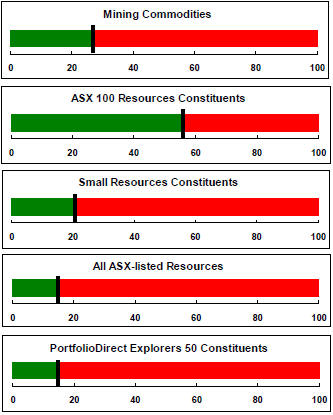
52 Week Price Ranges
Equity Markets
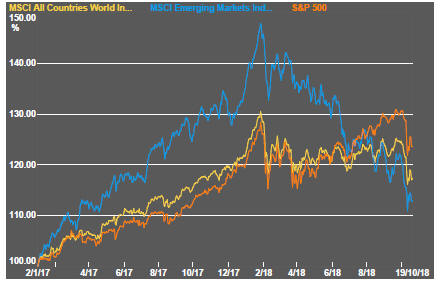


Equity prices finished the week on a down note after markets attempted an unenthusiastic recovery. The end result was slightly above recent low prices but the downward pressures remain.
Quickening growth and falling interest rates are the conditions most supportive for equity prices. In contrast, slowing growth and rising interest rates typify current conditions with much of the recent market volatility revolving around the how much growth is going to slow and how aggressively rates are going to rise.
The growth slowdown and the extent of monetary tightening are less pronounced than in earlier cycles, at least so far, holding out the hope that the impact on equity prices will be correspondingly modest.
Adding to the growth-monetary anxieties have been short-term influences such as the murder of Saudi journalist Jamal Khashoggi in Istanbul, the still unresolved Sino-US trade tensions and growing concerns about Italy’s budget standoff with the European Union.
Another factor which should have been well anticipated has been the growth slowdown in China where the government has reported that GDP grew 6.5% over the year to the September quarter.
Some analysts pointing to Chinese sectoral data are suggesting underlying growth is already less strong than the official headline number. There is also speculation that exports were boosted in September, with a beneficial effect on the GDP growth estimate, to beat implementation of US tariffs against Chinese goods.
The Chinese government moved quickly to introduce new measures to support markets and raise investment spending. China needs 6.5% GDP growth, at least, to enable sufficient job growth to meet the needs of an expanding labour force. That is becoming harder to achieve with policymakers already being urged to curtail lending.
Resource Sector Equities
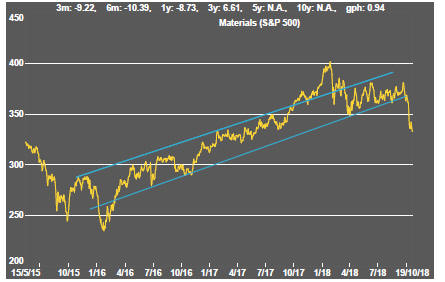
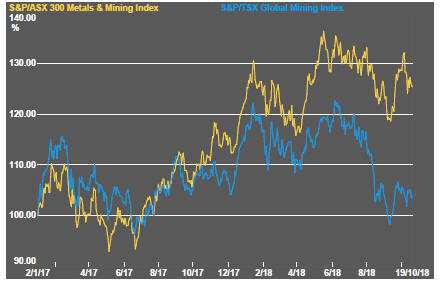
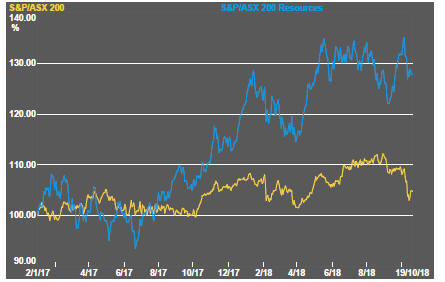
Market leading mining stocks were only slightly lower and surprisingly strong against a backdrop of investor worries about global economic growth momentum.
Explorers have gained least from the improvement in cyclical conditions since 2016 but have been relatively strong over the past four weeks mostly because they had previously risen least.
The market leaders have also benefited somewhat from a redeployment of funds away from technology and other market-leading sectors to under-performing commodity related equities which, some believe, will benefit from an inflation rise.
Interest Rates
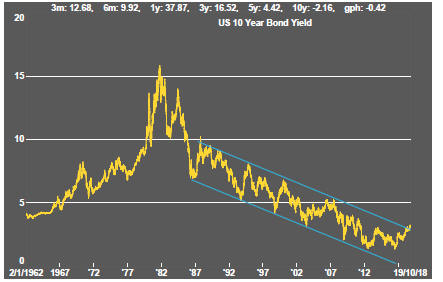

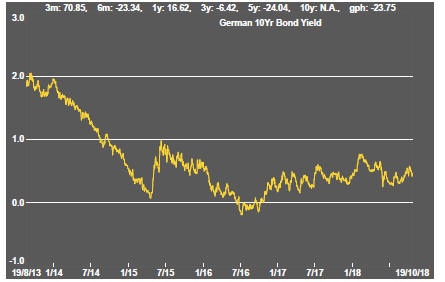
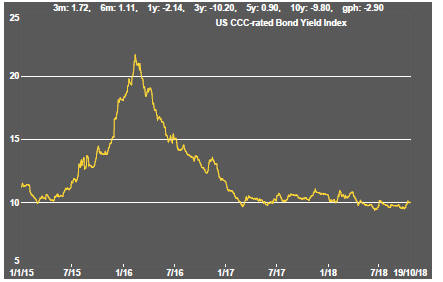
US government bond yields remained elevated but slightly lower than the levels which had been reached in recent weeks as expectations about interest rate rises solidified around the possibility of a more aggressive upcycle.
The flight from equities will have helped reduce yields for US and German government bonds. Italian bond yields, meanwhile, pushed to the highest levels in four years as the European Union rejected the proposed Italian budget with neither side signalling a willingness to compromise their positions.
Exchange Rates
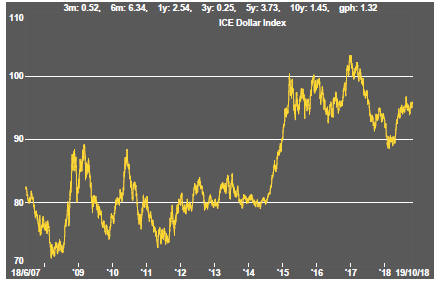
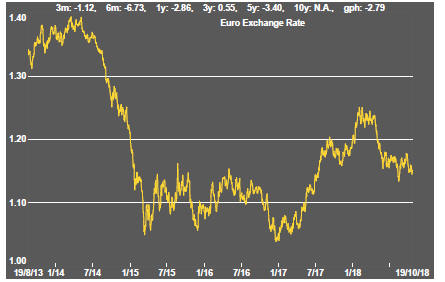
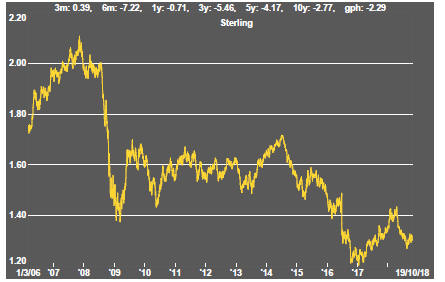
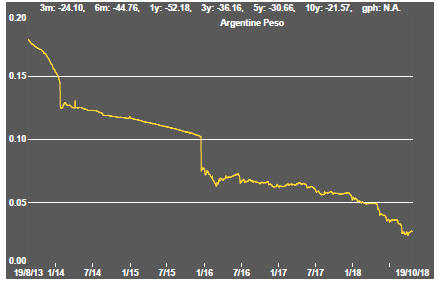
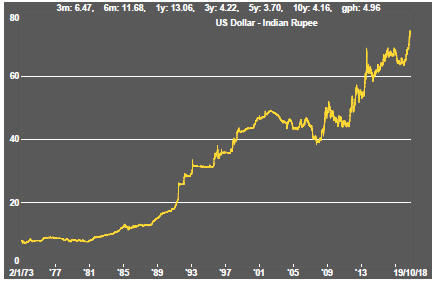

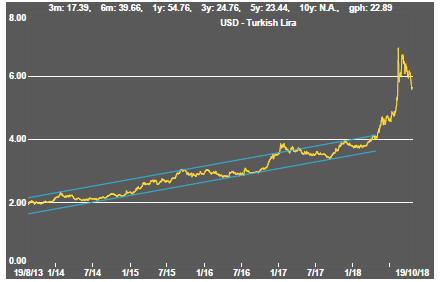
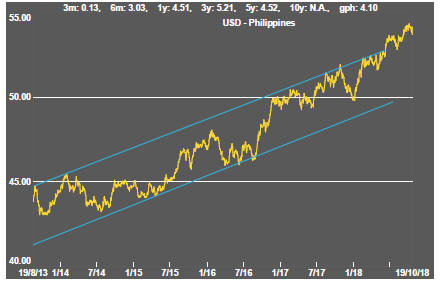
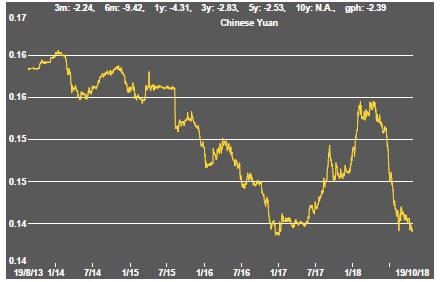

The period of dramatic exchange rate swings has passed, for the time being, as markets have adjusted to changes in conditions. The more modest day-to-day changes have been reflecting short-term financial asset price movements.
In Europe, progress toward a Brexit agreement has been an influence on near term exchange rate shifts. Both sides have said that a large majority of matters have been agreed but the Irish border impasse persists with little sign of a solution acceptable to the European Union, the Irish government, northern Irish political parties and the UK government.
The slight upward bias to the US dollar, impacted by Italian budgetary uncertainty, is having a negative effect on corporate earnings, posing another drag on equity prices.
The Australian dollar appears to be establishing a downward trend which might require a generalised improvement in commodity prices to be reversed.
Commodity Prices
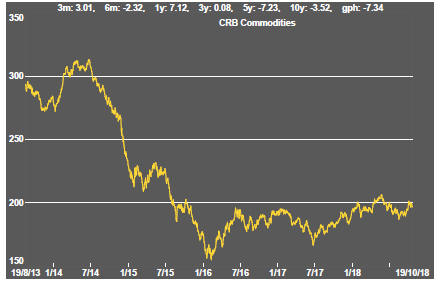
The general upswing in commodity prices since mid 2017 had been given added impetus by stronger crude oil prices.
Diminished momentum has left prices within the bounds of a cyclical trough, albeit at the upper end.
The flip side of the benefits for commodity producers and exporters of higher commodity prices is the cost pressure now being experienced by users of agricultural and raw material commodities. Reporting companies have been suggesting this as a source of margin compression.
Business surveys closely watched by central banks are showing signs of upward pressure on selling prices as a result of higher raw material prices.
Gold & Precious Metals
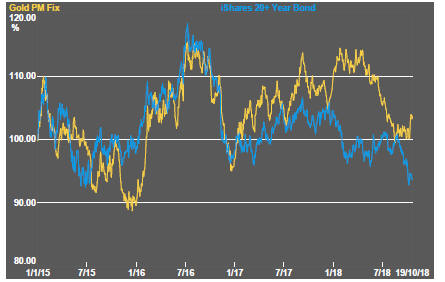

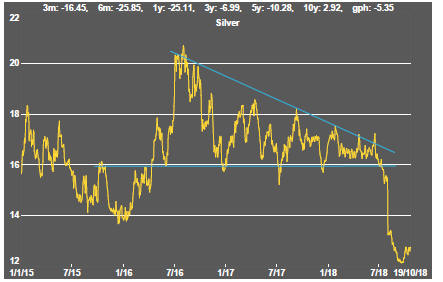
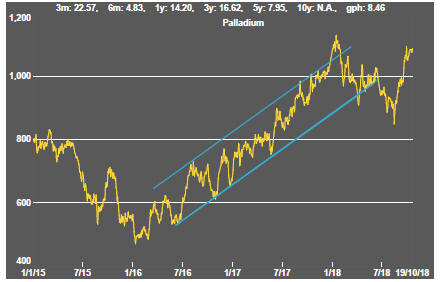
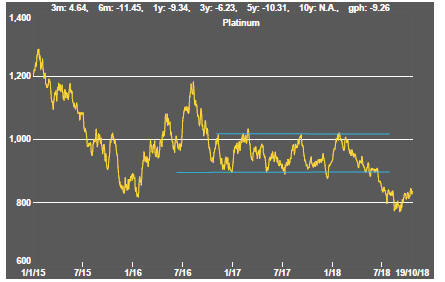
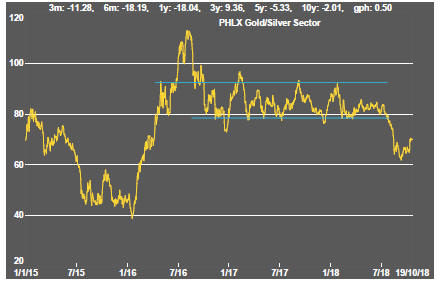
Gold prices have received a boost from the surge in equity price volatility despite the fall in bond prices which could have had a negative impact, and may do so in the future. Other precious metal prices displayed a similar reaction but only palladium prices have convincingly recovered from the recent bout of precious metal price weakness.
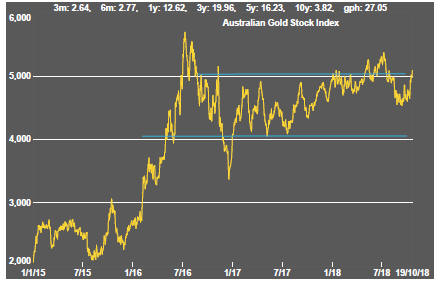
Australian gold-related equity prices have pushed back to the upper end of a two year trading range, helped by the margin improvement coming from a weaker Australian dollar. North American gold related equity prices have recovered little of their lost ground.
Nonferrous Metals
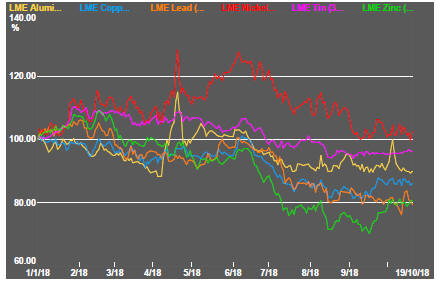


Most daily traded nonferrous metal prices edged lower during the week although tin and zinc prices continued to show greater strength than the others as they had done over the prior three weeks.
Copper prices - often a sensitive indicator of global economic conditions - have been at odds with bond prices in their interpretation of the momentum of activity.
Bulk Commodities

Chinese economic growth reports show the national economy meeting its targets, as one would expect for a centrally planned economy, but suggest it is only doing just enough. There are no signs of upside risk. The tariff fight with the USA is beginning to take a toll on activity rates in an economy with a bias toward less strong growth in the years ahead, in any event.
The latest manufacturers purchasing managers index for China, measuring conditions in September, implied a slowing momentum albeit within the context of a still expanding sector. The fall in the monthly reading was the largest since October 2017.
Reported GDP growth in the September quarter was consistent with official forecasts although hitting the targets is becoming more challenging by the year.
Iron ore prices continued to gain ground and, among the main mining commodities, are now one of the few sources of metal price strength over the past year.
Coal prices, which had shown signs of losing momentum - albeit after some strong gains - increased during the week. China reported growth in coal output between September and August and over the year to September with plans to open new capacity proceeding as the country switches to larger more efficient sources of coal production.
Oil and Gas

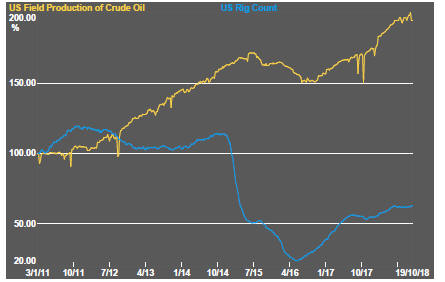
Crude oil prices dropped as concerns about demand growth loomed and supply constraints appeared looser.
OPEC has been losing control of the market as US and Russian production has become more significant and while several OPEC members lose their historical clout.
Reimposition of Iranian economic sanctions by the US government has put upward pressure on prices. The failure of effective government in Venezuela has been another contributing influence on higher prices.
The Iranians have been lobbying European countries to prevent more widespread application of sanctions but the likelihood of relief appears slim as long as funds must circulate through US banks.
US production, in any event, continues to rise and is now matching output from Russia and Saudi Arabia. Texas alone is positioned to be the third largest producer after Russia and Saudi Arabia. Export infrastructure limitations may be the greatest impediment to US production having a greater effect on international energy prices.
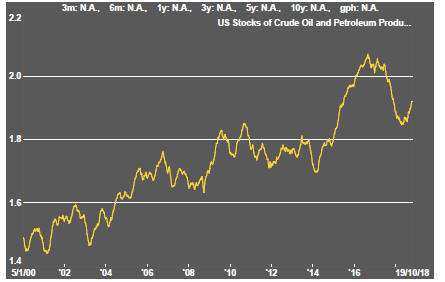
US stock holdings continue to rise impacting the structure of WTI futures prices.
OPEC also disclosed in its last monthly market report that it expected demand for crude to grow less strongly in 2019 than it had previously forecast in another sign of the decelerating global economy.
The prices of oil related equities reacted negatively to the change in market conditions. In reacting more aggressively to negative moves in crude oil prices than to upward moves, equity prices have produced no net change since May and no reaction to the higher prices since late August.
Battery Metals

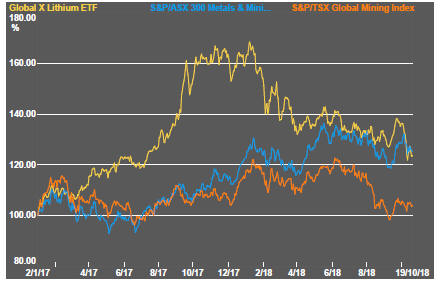
Eighteen months of rising lithium-related stock prices have given way to a prolonged period of market reassessment as a lengthy pipeline of potential new projects has raised the prospect of ongoing supplies better matching expected needs.
Potential lithium producers have been able to respond far more quickly to market signals than has been the case in other segments of the mining industry where development prospects have been slowed by reticence among financiers to back development.
Movements in lithium related equity prices had been aligned more closely with overall sector equity prices in recent weeks with the lithium stocks tending to display a greater leverage to changes in market sentiment about the mining sector.
The median fall from their 52 week high within a large sample of 80 Australian and Canadian listed stocks with lithium exposure, mostly with an exploration orientation, has been 56%. Every one is trading below its peak price from the last year.
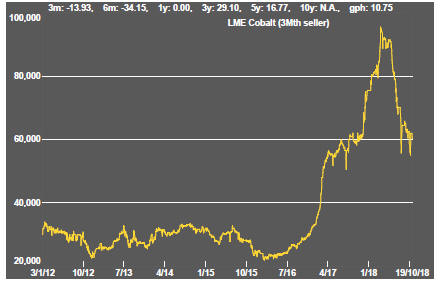
Battery metals remain a focal point for investors with recent attention moving to cobalt and vanadium.
Doubts about political conditions in the Democratic Republic of the Congo (and instances of Ebola) have added a dimension to cobalt prices lacking in other metals caught up in the excitement over the longer term impact of transport electrification.
In the longer term, cobalt is the most vulnerable of the battery related metals to substitution with high prices likely to stimulate research in that direction.
A spokesperson for Panasonic, manufacturer of batteries for Tesla motor vehicles, has been quoted as saying that the company intends to halve the cobalt content of its batteries because of uncertainties over supply although, offsetting such a move, will be the rapid increase in the number of units produced.
Uranium


The uranium sector is in the midst of forming a prolonged cyclical trough as market balances slowly improve. Power utilities are still reluctant to re-enter the market for contracted amounts of metal to meet longer term needs. A slight upward bias in prices has been evident in the past month.
Slightly higher equity prices from time to time, in the hope of improved conditions, have not been sustained but could be repeated as speculation about improved future demand ebbs and flows. The effect of an announcement by Canadian producer Cameco to extend the duration of its previously implemented production cut gave the market a very slight but quickly lost lift.
News that the Kazakhstan government intends to list its state owned uranium producer and the world's largest producer, may suggest greater responsiveness to market conditions and less emphasis on production to maximise government revenue.
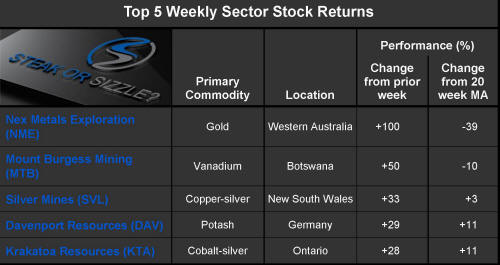
The Steak or Sizzle? blog LINK contains additional commentary on the best performed stocks in the sector and the extent to which their investment outcomes are underpinned by a strong enough value proposition to sustain the gains.