The Current View
A lengthy downtrend in sector prices had given way to a relatively stable trajectory after mid 2013 similar to that experienced in the latter part of the 1990s and first few years of the 2000s.
The late 1990s and early 2000s was a period of macroeconomic upheaval during which time sector pricing nonetheless proved relatively stable.
Relative stability suggests a chance for companies genuinely adding value through development success to see their share prices move higher. This was the experience in the late 1990s and early 2000s.
Still vulnerable cyclical conditions were aggravated in the second half of 2015 by a push from investors worldwide to reduce risk. Sector prices were pushed to a new cyclical low. These conditions were largely reversed through the first half of 2016 although sector prices have done little more than revert to mid-2015 levels.
With a median decline in prices of ASX-listed resources companies through the cycle of 89%(and 30% of companies suffering a decline of more then 95%), the majority of stocks remain prone to strong 'bottom of the cycle' leverage in response to even slight improvements in conditions.
Has Anything Changed?
A 1990s scenario remains the closest historical parallel although the strength of the US dollar exchange rate since mid 2014 has added an unusual weight to US dollar prices.
The first signs of cyclical stabilisation in sector equity prices have started to show. This has meant some very strong ‘bottom of the cycle’ gains.
Funding for project development may have passed its most difficult phase at the end of 2015 with signs of deals being done and evidence that capital is available for suitably structured transactions.
Key Outcomes in the Past Week

Market Breadth Statistics

The gap between oil price and equity price movements opened dramatically.
There is no reason to expect that oil and equity prices should always track one another but oil prices are correlated indirectly with U.S. investment spending and, for some investors, will signal something about the state of the global economy. Both factors will impact US equity markets to varying degrees.
The most recent oil price decline is another instance of the tug of war between US and OPEC producers which is resulting in US producers quickly stepping into any supply gap the OPEC producers might engineer as part of their market support attempts.

Weaker bond prices fed into further downward pressure on gold.
The two had deviated during February but bond prices remain a worthwhile guidepost to the future direction of gold prices, especially when the two may temporarily reduce their correlation.

The broader metal complex also lost ground.
There were financial market influences, such as higher bond yields and the US dollar exchange rate, but the absence of stronger growth to motivate price moves has started to reassert itself as a more prominent influence on sector outcomes.

The downward moves in commodity prices more generally indicated an unfavourable macro backdrop as well as peculiar influences on individual commodity markets.
The CRB commodity price index suggests that the macro environment is past the worst for commodities but has been insufficient to provide a sustainable cyclical uplift.

Yields on lower rated corporate bonds, an indicator of funding access for higher risk investments, have reached the bottom of the range of historical outcomes with lower oil prices likely to disturb further downward momentum as assessments of future cash flows limit the funding appeal, at least for the time being, of the more marginal oil producers.
.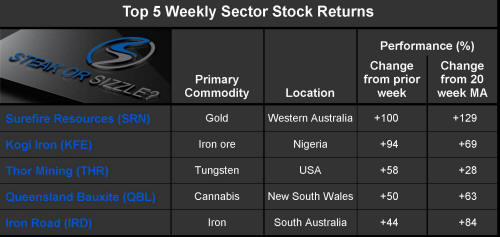
The Steak or Sizzle? blog LINK contains additional commentary on the best performed stocks in the sector and the extent to which their investment outcomes are underpinned by a strong enough value proposition to sustain the gains.
