The Current View
A lengthy downtrend in sector prices had given way to a relatively stable trajectory after mid 2013 similar to that experienced in the latter part of the 1990s and first few years of the 2000s.
The late 1990s and early 2000s was a period of macroeconomic upheaval during which time sector pricing nonetheless proved relatively stable.
Relative stability suggests a chance for companies genuinely adding value through development success to see their share prices move higher. This was the experience in the late 1990s and early 2000s.
Still vulnerable cyclical conditions were aggravated in the second half of 2015 by a push from investors worldwide to reduce risk. Sector prices were pushed to a new cyclical low. These conditions were largely reversed through the first half of 2016 although sector prices have done little more than revert to mid-2015 levels.
With a median decline in prices of ASX-listed resources companies through the cycle of 89%(and 30% of companies suffering a decline of more then 95%), the majority of stocks remain prone to strong 'bottom of the cycle' leverage in response to even slight improvements in conditions.
Has Anything Changed?
A 1990s scenario remains the closest historical parallel although the strength of the US dollar exchange rate since mid 2014 has added an unusual weight to US dollar prices.
The first signs of cyclical stabilisation in sector equity prices have started to show. This has meant some very strong ‘bottom of the cycle’ gains.
Funding for project development may have passed its most difficult phase at the end of 2015 with signs of deals being done and evidence that capital is available for suitably structured transactions.
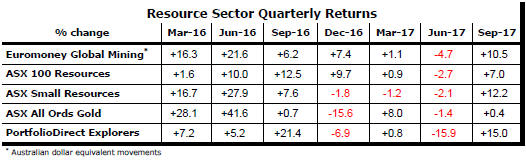
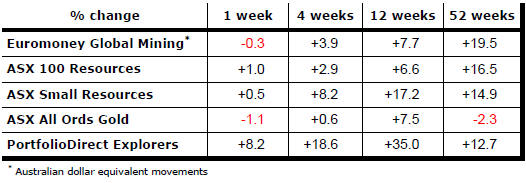
Key Outcomes in the Past Week
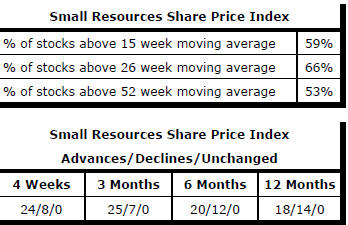
Market Breadth Statistics
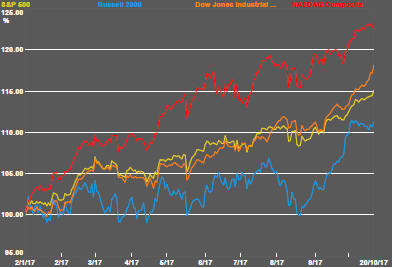
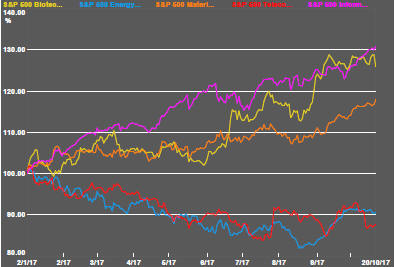
US equity markets set more records although the most dramatic gains came from the Dow Jones Industrial index which is more susceptible to the change in price of individual stocks. Russell 2000 momentum has diminished.
Performance disparities among the main indexes have been influenced by perceptions about which companies are most likely to benefit from anticipated corporate tax changes.
Technology continues to be a leading sector. Greater confidence about the growth outlook continues to underpin the performance of stocks in the materials sector.
The US Congress moved closer to restructuring corporate and personal the tax schedules when it approved a budget resolution which will permit the US Senate to make changes to the tax code with a majority vote thereby limiting reform participation to members of the Republican Party.
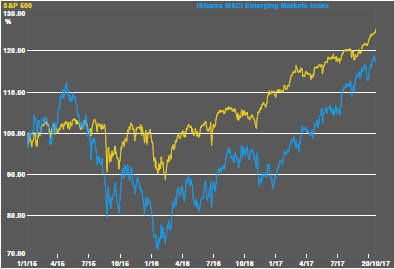
While it is tempting to highlight political and economic developments in the USA to help explain the strength of markets, emerging market equity prices have also been on a rising trend.
The more optimistic view about growth has extended beyond the US.
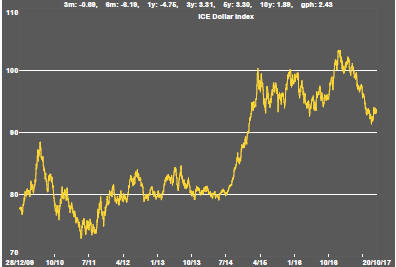
The weaker US dollar is another manifestation of the extent to which investors have embraced investment opportunities outside the USA.
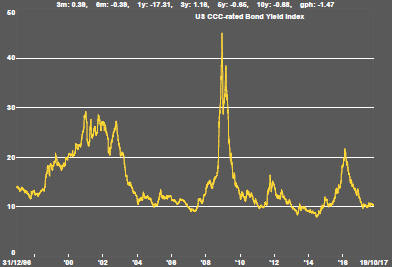
Yields on low grade corporate bonds remain near historically low levels suggesting some compression of risk premia as higher quality government bond yields have risen.
The corporate bond yield trajectory is consistent with the implied view in equity markets that risks are low. Such a view can persist, perhaps for years, but does invite the possibility that sentiment could change quite rapidly.
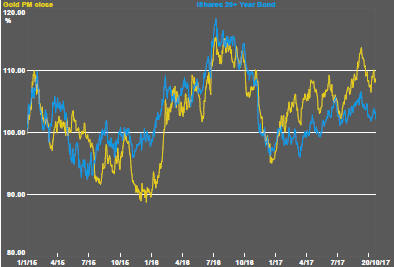
Lower bond prices in the past week are consistent with better growth prospects but yields remain well below levels which might signal worries about inflation or about the impact of the Federal Reserve withdrawing from its securities market support efforts.
The link between financial markets and gold prices has persisted with gold prices falling in line with lower bond prices/higher yields.
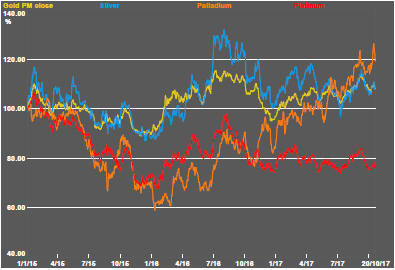
The principal precious metal price indicators edged lower toward the end of the week.
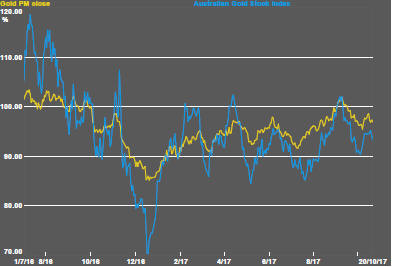
Australian gold equities moved lower in response to the weakening gold price.
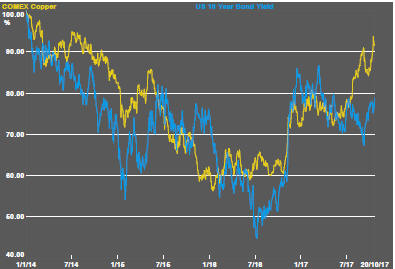
The rinsing copper price was at some odds again with the decline in US government bond yields emphasising the ongoing divergence between equity market preoccupations with growth and debt markets seemingly thinking more pessimistically about the economic outlook.
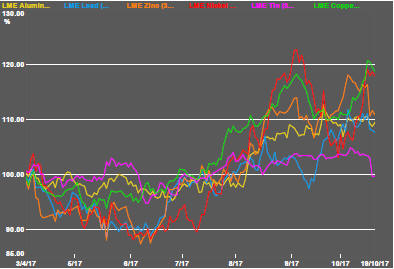
Metal price momentum has begun to turn as financial market conditions - bond yields and exchange rates - have become less supportive of higher metal prices.
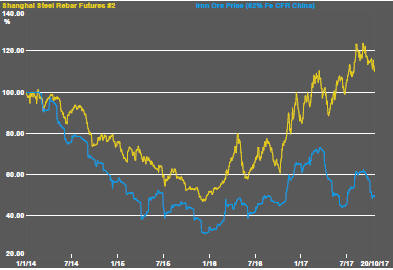
The momentum of metal price change extended into the iron ore market as Chinese steel market conditions have also begun to turn lower.
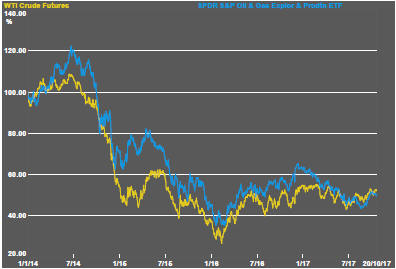
Although crude oil market conditions have improved since early 2016 and, more recently since mid 2017, they remain cyclically weak with only limited improvements in market balances reflected in equity prices.
.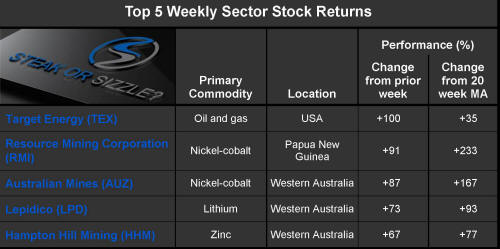
The Steak or Sizzle? blog LINK contains additional commentary on the best performed stocks in the sector and the extent to which their investment outcomes are underpinned by a strong enough value proposition to sustain the gains.
